Showing posts with label Final Project. Show all posts

Monday, May 26, 2014

Final Project on Alfredo V. Lagmay, Sr. by Group 2: Team Ina

Alfredo V. Lagmay Sr.
August 14,1919 - December 15, 2005

Miro Jan Benedict G. Navarro    Erin Faith C. Castro          John Paul M. Taylor       Shyrill Mae Mariano
2010-25812                                  2010-25915                      2013-22107                     2012-60404

Dea Marie Isabel A. Villarosa              Ezequiel Joshua D. Gruezo         Steven Matthew Cheng
2012-61382                                           2013-17857                                  2010-11134

Marinela Isabelle M. Capistrano          Sarah Joy Bonacua                      Arvin Wilson S. Alba

2013-44222                                                                                               2011-18060

Abstract - There is no doubt that Filipinos arent underdogs in the field of science and technology. Such is proved by the exemplary Filipino scientists like Alfredo V. Lagmay. This paper tackles the life and career of Filipino Scientist Alfredo V. Lagmay and his contributions to the field of science and technology. This is done as a partial requirement for STS X2, summer class 2014 under Professor Juned Sunido.

Tags:  Alfredo V. Lagmay Sr. , psychologist,  pioneer of Filipino Psychology, National Scientist


Jose R. Velasco (Group 8 Final Project)

Jose R. Velasco
(February 4, 1916 — January 24, 2007)

Alcaide, Allen
Castro, Christel
Garcia, Edwin
Imperio, Etienne
Lazatin, Paola
Lorin, Kendra
Mendoza, Naomi
Ramos, Fevie Ann
Salenga, Darlene
Tarongoy, Sarena


Abstract

             Jose R. Velasco (February 4, 1916 - January 24, 2007) was a Filipino agricultural chemist and plant physiologist. He studied the properties of the substances used in agriculture, photoperiodism, and primarily about a coconut disease called cadang-cadang. He received recognition from various bodies for his works and in 1998, he was awarded and recognized as a National Scientist of the Philippines.


Tags: Jose R. Velasco, National Scientist of the Philippines, Imus Cavite Elementary School,  Philippine School of Commerce, Central Luzon Agricultural School, Central Luzon State University, University of the Philippines Los Baños, College of Agriculture,  agricultural chemist, plant physiologist, teacher, administrator, substances used in agriculture, photoperiodism, coconut disease, cadang-cadang, U.S. State Department Fellowship, University of the Philippines Fellowship, Secretary of the Department of Agriculture and Natural Resources Certificate of Merit, SEATO Fellowship, Gugenheim Foundation Fellowship, University of the Philippines Alumni Award, Colombo Plan Special Visitor to Australia, UPCA Distinguished Alumni Award, UNESCO Exchange Professor in Plant Physiology in Universidad de la Havana, Planters Product Achievement Award for Crop Science in the Field of Teaching, PCCP Distinguished Award in Pest Management, Special Visitor to Japan, Imus Elementary School Outstanding Alumnus Award, Outstanding Imuseño Award


Personal Life

Dr. Jose R. Velasco is a plant physiologist and agricultural chemist.  He is also a national scientist, a teacher, administrator and a family man.    He was born on February 4, 1916 in Imus, Cavite. He is one of the five children of Hugo R. Velasco and Guillerma Ramirez. His father is a U.S. Army in Manila while his mother is a housewife (Ongkiko, n.d.).

At a young age, he already had the dream of being a lawyer.   He learned the skills of typing and short hand that also led him to think about using these skills in finding a job to help him fund his desired law school.  But, when he studied in a vocational school, Philippine School of Commerce (PSC), he figured out that he is not for stenography instead, he noticed that he is good in English and history. As a consequence, he transferred to Central Luzon Agricultural School (now Central Luzon State University, CLSU) in Nueva Ecija and stayed there for three years.  He graduated salutatorian instead of valedictorian because of the lack of residency.  Afterwards, he studied in the University of the Philippines College of Agriculture in Los Baños, Laguna. He did this because he received a scholarship and he also realized that he is really not for law.  “Law’s loss was science’s gain,” said Velasco in an interview in the book National Scientists of the Philippines (1978-1998).  This time, he graduated top of his class, giving him the Joaquin Gonzalez medal.  He is also a cum laude (1940) in Bachelor of Science in Agriculture Major in Agricultural Chemistry (Ongkiko, n.d.).

He worked as a teacher after he graduated.  He was described by his students as intimidating but they always remember him as a man of integrity.  And since he always works hard, he didn’t expect anything less from others.  He seems happiest when he researches or reads (Ongkiko, n.d.).

On March 9, 1941, he married Felicidad Ibañez, a school teacher from Luisiana, Laguna.  They had eight children: Maria Dolores, Victor Hugo, Vladimir Fred, Jose Alberto, Jaime Luciano, Maria Natividad, Luis Rey and Vernon Raymund and 16 grandchildren (Eala, 1967, 529). Maria Natividad is the only one who followed his being a chemist.  Meanwhile, Luis Rey works in education and research.  Four of his children are in the U.S. while the others stay in the Philippines.  He decided to stay in the Philippines because it seems that he can’t leave his life and work here.  He is very nationalistic and supported the Filipino products and local projects.  He said that Filipinos should “patronize products made by Filipinos” (Ongkiko, n.d.).

He died at the age of 90 on January 24, 2007.


Academic and Professional Career

Jose R. Velasco, also known as Pepe, completed his elementary education at Imus Elementary School in Cavite. His skill in making a way out of every arguments he had with his older brother, Constantino when he was young, paved the way for him to dream about becoming a lawyer. But unfortunately, his parents weren't financially capable to send him to an academic high school so he was instead sent to a vocational high school, the Philippine School of Commerce. There, he was to study stenography. However, while he was at PSC, he discovered that he had no skills in typing which resulted to nearly failing it. Because of this, his father suggested that Pepe should transfer to an agricultural high school. He then moved to the Central Luzon Agricultural School, now the Central Luzon State University or CLSU. In order to sustain his needs, he worked as a rice farmer for three year in Nueva Ecija. In the end, his hard work paid off and graduated salutatorian (Ongkiko, n.d.).

For his college education, he enrolled in the University of the Philippines College of Agriculture (UPCA) in Los Banos, Laguna. His reasons for getting his tertiary studies there were: his mother's concern for him and the scholarship grants for top high school graduates. At UPCA, he decided to study mathematics and chemistry. That time, he had decided to forgo his law school dream but was certain that he didn't want to be a farmer. He graduated cum laude in 1940 with a Bachelor of Science in Agriculture major in Agricultural Chemistry. His father and his brother weren't able to make it to his graduation, but his mother was there to see him receive the Joaquin Gonzalez medal for graduating at the top of his class. On a side note, according to Dr. Velasco, mathematics was his best subject (Ongkiko, n.d.).

Dr. Velasco didn't just only focus in academics, he was also into sports. Though he did not actually excelled in the field events, he was still in the varsity team. The best he got in shot put was third place in an inter-university competition. He also were in the boxing team but didn't win any major fights (Ongkiko, n.d.).

Jose Velasco taught at the UPCA Department of Agricultural Botany for several years. His service was apparently interrupted at different times by WWII (1941-1943), by his stint as US Department of State scholar to the University of California Berkeley (1946-1947), and by a UP Fellowship award to continue his studies at the aforementioned American university (1947-1949) (Ongkiko, n.d.).

At Berkeley, he enrolled in the straight Ph.D program and completed his studies in three years. When he went back to Los Banos in 1949, he had a Doctorate degree in Plant Psychology. He was a research professor, director of research director of instruction, chairman of the department of botany, and editor of the Philippine Agriculturist (the college's scientific journal) at the UPCA till 1965 (Ongkiko, n.d.).

In 1965, he transferred to UP Diliman in Quezon City. There, he became a botany professor and UP Quezon Land Grant manager. After 2 years, he left his teaching profession to serve as the Commissioner of the National Institute of Science and Technology (NIST), for 10 years (Ongkiko, n.d.).


Contributions

Dr. Velasco, as an agricultural chemist, focused on the properties of the substances used in agriculture. He also studied different aspects involved in the life of plants and this include photoperiodism of plants or how they respond to different lighting periods. His study on the said subject led to his discovery that the Elon-elon variety of rice is capable of flowering during short days which have 12 hours (Ongkiko, n.d.).

His major study is about the coconut disease called cadang-cadang which is one of the main problems of small coconut farmers in the Philippines. This disease was the cause of the death of coconut trees in Bicol Region with an earliest occurrence in 1926 at San Miguel Island, Tobacco, Albay until more subsequent cases were reported in other areas (Velasco, 1999, 68).

A coconut tree suffering from cadang-cadang has small, irregularly shaped, bright yellow spots on the leaves and these spots would eventually grow bigger because of chlorosis. The affected leaflets will turn smaller and brittle and the production of flowers and nut will also decrease. The leaves will gradually fall until the remains will only be a bunch of yellow leaves with a dark green center of upright leaves at the top of the trees which indicates the death of the tree (Ongkiko, n.d.).

Dr. Velasco believed that cadang-cadang was caused by an abnormal soil condition contrary to the popular belief that it was caused by a virus or bacteria. The hardest part in proving his theory is in finding the causes of cadang-cadang; but because of his perseverance and diligence as a researcher and a scientist, he was able to find some literature which led him and his team in concluding that this blight might probably be caused by rare earths found in the soil. He also studied which elements of the rare-earths are the most probable cause of the disease (Ongkiko, n.d.). An example of his study regarding this is titled “Rare Earths in Coconut Groves Affected by the Cadang-cadang Disease” (Velasco, 1999, 68).

He is truly a strong-willed and firm scientist for he continued his so-called “search for certainty” for the cause of cadang-cadang even though he learned from the literature that many researches showed that cadang-cadang is probably caused by viruses, nutritional imbalance of the soil, poor drainage, stress, or microorganisms (Ongkiko, n.d.). His researches greatly contributed to the knowledge in agriculture in the Philippines and can spark possible agricultural innovations in the future.


Recognition and Awards Received

Even during his early years, Jose Velasco has already excelled in his studies

High School: Salutatorian, Central Luzon Agricultural School (now Central Luzon State University)
College, 1940: Cum Laude, BS Agricultural Chemistry, University of the Philippines

Due to his numerous works and important contributions to our society, Dr. Velasco was recognized by different bodies which has given him due recognition and awards

1946-1947: Fellowship, U.S. State Department
1947-1949: Fellowship, University of the Philippines
1959: Certificate of Merit, Secretary of the Department of Agriculture and Natural Resources
1963: Fellowship, SEATO
1963: Fellowship, Gugenheim Foundation
1967: University of the Philippines Alumni Award
1970: Colombo Plan Special Visitor to Australia
1971: UPCA Distinguished Alumni Award
1972: UNESCO Exchange Professor in Plant Physiology in Universidad de la Havana, Cuba
1974: Planters Product Achievement Award for Crop Science in the Field of Teaching
1974: PCCP Distinguished Award in Pest Management
1976: Special Visitor to Japan
1981: Outstanding Alumnus Award, Imus Elementary School
1991: Outstanding Alumnus Award, Imus Elementary School
1996: Outstanding Imuseño Award

And lastly, he was also one of the top scientists recognized by the government and awarded with the most prestigious award any Filipino scientist would hope for.

1998: National Scientist of the Philippines


Media
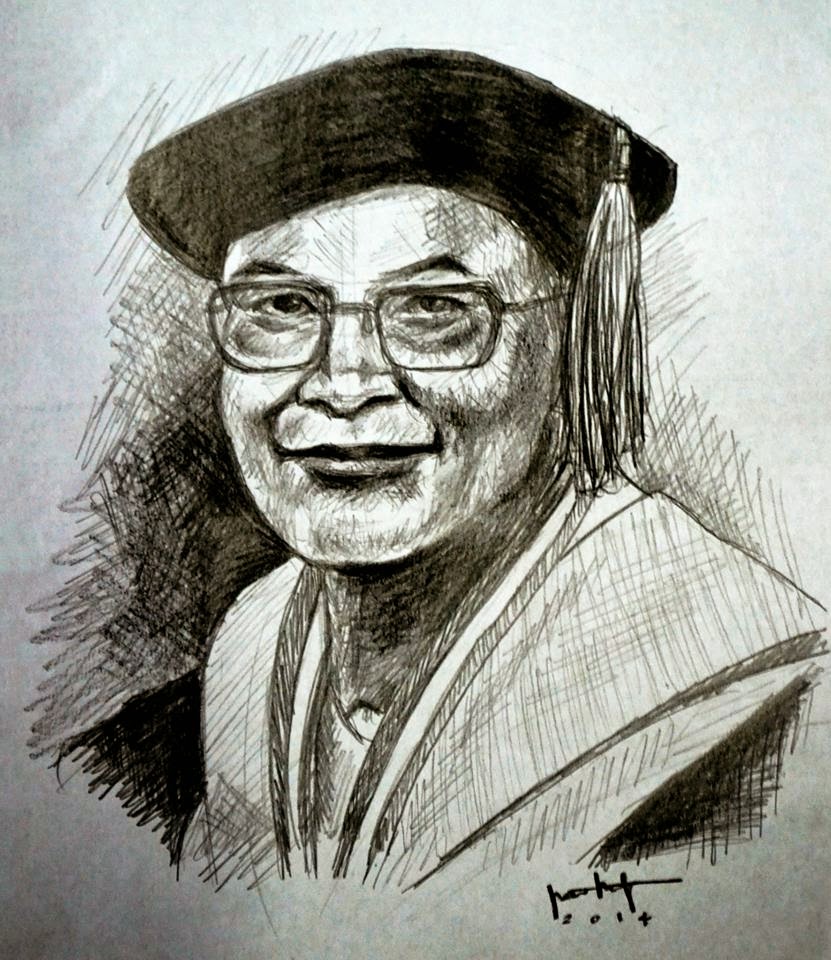
Portrait of Jose R. Velasco by Naomi Mendoza


Photos of Central Luzon State University Science High School, the high school Jose R. Velasco attended. Photos taken by Jeno Julius Garcia.


References

[1] Velasco, Jose R.. 1999. Selected Papers of Jose R. Velasco. National Academy of Science and   Technology, Bictuan, Taguig, Metro Manila, Philippines.

[2] Ongkiko, Ila Virginia C.  Jose R. Velasco Plant Physiologist on the Trail of a Coconut Killer. National Scientists of the Philippines (1978-1998). Department of Science and Technology – National Academy of Science and Technology Philippines. Anvil Publishing, Inc..

[3] Eala, Quintin A. 1967. Philippine Men of Science. Sojer, Beatrice, Torrijos, Delia, et. al.. Volume 2. National Institute of Science and Technology, Manila, Philippines.

[4] Famous Filipino dot com. 2006. Jose R. Velasco. http://www.famousfilipino.com/content/view/82/116/. Accessed May 24, 2014.

Dr. Juan Salcedo, Jr. (Group 14 Final Project)


Dr. Juan Salcedo, Jr.
(September 29, 1904-October 25, 1988)
 Photo by Rosario Torres. Source: Life’s Documentation. “Juan Salcedo, Jr.- Vanguard of Public Health.” Accessed May 22, 2014. http://personalmemoir.wordpress.com/2009/06/04/juan-salcedo-jr-vanguard-of-public-health/

Authors:
John Philip Orate, Lorenz Carlo Aliwalas, Christine Jamie Melchor, Conrado Alfonso Favis, Eleennae Love Ayson, Patricia Manahan, Jasper Cruz, Darell Calayag, Carl Anthony Abrenica

Abstract
Medical services and breakthroughs are unending as long as diseases remain prevalent. Dr. Juan Salcedo, Jr., a distinguished scientist in public health and nutrition, initiated the combat against beriberi through his "enriched rice experiment", malaria and tuberculosis through a nationwide Bacillus Calmette–Guérin (BCG) vaccination. This project highlights Dr. Salcedo's accomplishments and contributions to Philippine medicine as well as recognitions and awards he garnered. 

Tags: Dr. Juan Salcedo, Jr., beriberi, malaria, tuberculosis, food and nutrition, health, military corps, secretary of DOH, World Health Assembly, professor of UP Med

Introduction

            “For he who has health has hope; and he who has hope, has everything.” – Owen Arthur

Truly this quote was enlivened by Juan Salcedo, Jr. He dedicated his life pursuing over the development of medical services and through his amass search of knowledge in his field of study. He had surpassed much training here in the Philippines and abroad to acquire the right skills to help in community awareness in different kinds of aspect like public health, food problems, population. “Using science, he became a recognized authority in nutrition and many more. (Andaya, 2000, p.109) “
He also contributed to many articles and some books which help inform others about the diversity in many field like diseases, abnormalities and the likes. “For his many achievements, he was conferred with the rank and title of National Scientist by President Ferdinand E. Marcos in July 1978 for his being an authority in Nutrition and Public Health and Medical statesman, who conducted medical research for the improvement of the health and nutrition of the people and who spent much of his lifetime studying health factors ranging from fatty acids to vitamins. (Andaya, 2000, p. 109)” The Filipinos are very proud of what he had achieved and for the contributions he had done to our nation, He is truly one of the most brilliant minds and a one of the many outstanding Filipino Scientist.

I. Life of Dr. Juan Salcedo, Jr.

Dr. Juan S. Salcedo was a scientist with a firm conviction that “Science will pave the way to man’s salvation in the face of expansive tendencies on many fronts – disease, food problems, population, illiteracy, poverty… (Andaya, 2000)”

Dr. Juan Salcedo Jr. is a distinguished scientist in Philippine public health and the chairman of the National Science Development Board. “Salcedo was the authority in nutrition and public health, contributing to areas of biochemistry, nutrition and physiology, using science to alleviate disease and food problems of the country (Andaya, 2000).” He was born to Juan Salcedo Sr. and Felipa Sanchez on September 29, 1904 in Pasay City.

At his early age, Juan Salcedo had already developed a sense of patriotism and love for his country. In elementary school, he read and reread Rizal’s Noli Me Tangere and El Filibusterismo. He also excelled academically as he graduated salutatorian at the Paco Intermediate School and garnered second honor at the Manila South High School.

Dr. Salcedo initially took up engineering, but the sight of poor and sickly children scattered in the streets drew his compassion. Back then, disease was a major concern of the country, lacking health facilities and services. Because of this, Juan shifted to medicine. In 1929, he finished his Doctor of Medicine degree from the University of the Philippines (UP) College of Medicine as a second honor in a class of 28.

Dr. Salcedo specialized in many things. He joined the faculty of UP College of Medicine as an instructor in Physiology and an assistant professor in Biochemistry. He even joined the army as captain of the Medical Corps for three years. In 1943, he also obtained a Masteral degree in biochemistry and endocrinology from Columbia University. In 1946, he obtained the title Doctorate in Science with high honors from the Philippine Women’s University. And in 1970, he finished studying the Laws in the University of the Philippines. (Ghasenpour, 1998)

Salcedo, born to a wealthy family was “a well-studied, much appointed and in demand man during his time. He was a scientist who took pleasure in learning and sharing his knowledge and expertise with his country. (Ghasempour, 1998)”

On December 19, 1931, he married the former Elvira Galvez, a pharmacist, and they had six children: Joselito, Maria, Dolores, Rosa Lina, Alberto, and Elvira. Immediate relatives pictured Dr. Salcedo as a very thoughtful, caring and highly concerned parent whose belief in family values was as profound as his faith in God (Andaya, 2000).

To many of his colleagues, he was not only a scientist, but also an executive, administrator, educator and humanitarian. As he held many vital government posts, he remained low-key, apolitical and uncontroversial (Andaya, 2000).

Because he was highly successful in all his work, he is believed to have influenced many scientists and technicians, particularly those involved in the governments thrust toward economic emancipation, in developing interest and pursuing studies in science and technology, thus enlarging the core of the nation’s scientific manpower (Andaya, 2000).

            In July 10 1978, he was conferred the rank and title National Scientist by President Ferdinand E. Marcos in recognition for his being an authority in nutrition and public health and for conducting medical research for the improvement of the health and nutrition of the Filipinos (Andaya, 2000).

            He died on October 25, 1988 at the age of 84 and was given a state funeral. He was buried at the Libingan ng mga Bayani.

II. Academic and Professional Career 

Aside from receiving numerous awards and recognitions, Juan Salcedo, Jr. held high positions in the academe, military, government and other non-government organizations. In 1946, he became the first president of the UP Medical Alumni Society (UPMAS) [class ’29]. He also became the president of Araneta University Foundation from 1970-1981. He also had experience being Dean of the graduate school and Dean of UE College of Medicinein 1958. During 1954-1958, he was a professor of the Department of Physiological Hygiene and head of the Department of Biochemistry - UP Med. He also became an instructor in Physiology, an Assistant Professor in Biochemistry and a Professional Lecturer in both Physiology and Biochemistry for the UP College of Medicine. In the Military field, he became Army captain in the medical corps from 1936-1939 and he later became colonel.

He served the country as Health and Welfare Officer, later Director of Public Welfare, during the Osmena administration. Also, as the Executive Director of the Philippine Relief and Rehabilitation Administration for one year, 1945-1946, and Representative to the United Nations Relief and Rehabilitation Administration from 1945-1947. He became the Secretary of Health during the Quirino administration. In addition, from 1954-1958 he was President Ramon Magsaysay’s chairperson of the Institute of Science and Technology Advisory Board. In 1957, during Carlos Garcia’s tern he was the Presidential assistant on science and technology. In addition, in 1963-1970, during Diosdado Macapagal’s presidency, he was Chairman of National Science Development Board.

“In 1952, he became one of the original board of trustees and incorporator of the Philippine Rural Reconstruction Movement (Philippine Rural Reconstruction Movement 50th Anniversary Program).” Aside from local duties, he was the First Asian elected unimpeded to head the World Health Organization Assembly from 1952-1953. Moreover, he was a Member of the first Board of Advisers of the University of Hawaii East-West Center. 

III. Contributions

Countermeasures against Beriberi
            “Beriberi is a disease brought by the deficiency of thiamine or vitamin B1 (“Beri-Beri”)”. It was widely spread among the regions whose staple food was polished rice.  “This type of rice has undergone de-husking in order to prolong its life which unintentionally resulted to the removal of thiamine (Kennedy, 2013).”


During the years 1882-1883, there was an outbreak of beriberi in the Philippines.  No one was able to pinpoint the main cause of the beriberi symptoms. “Around the early 1900s, a chemist named Dr. Robert R. Williams entered the US Bureau of Science and researched the theory that beriberi was caused by a nutritional deficiency (“Beri-Beri”).”  He first isolated thiamine in 1933 and synthesized Vitamin B1, the first vitamin in its pure form ever isolated, in 1936.

“In 1943, Dr. Williams met Dr. Juan S. Salcedo, Jr., who’s concerned with the elimination of beriberi in the Philippines.  Dr. Salcedo was the Secretary of Department of Health (DOH) from 1950 to 1953, and this was the time when he implemented the “enriched rice experiment” which fortified the rice with Vitamin B (Andaya, 2000).”  This enriched rice became the staple food of those affected by beriberi in the Philippines, thus, eliminating the problem.

Malaria and tuberculosis
Malaria is causes chills and fever.  “This is caused by the Plasmodium parasite which is transmitted by Anopheles mosquitos (Sarkar PK., et. Al., 2009).”  On the other hand, “tuberculosis is a chronic and contagious disease of the lungs caused by various strains of mycobacteria (Kumar V, et. Al., 2007).”  Since both of these diseases are known as killers and are both easily transmitted, Dr. Salcedo launched relentless campaigns against them. “He mounted a nationwide Bacillus Calmette–Guérin (BCG) vaccination among children and systematized teams that would eradicate mosquitos especially in places where Malaria incidents are high (Andaya, 2000).”  Together with this, he provided preventive measures to the people and established rural health center network that would bring services not only to urban areas but also to remote and rural areas in the Philippines.

Nutrition
A lot of his works are focused on nutrition. From recommended daily for specific nutrients, progress of nutrition in the Philippines, to vitamin intakes and deficiencies such as Vitamin A and B1, Dr. Salcedo has written about it. He seemed to be focused on the nutrition intakes of the citizens as seen from the list of his works, and this works of him have helped him to find a solution for the Beriberi outbreak in the Philippines.
IV. Recognition and Awards Received
1957    President of the Philippines Awards for outstanding public health nutritionist in the past decade
1957    U.P Alumni Assoc. Award for outstanding alumnus of the College of Medicine
1955    President of the Philippines Awards for outstanding achievement in basic medical science
1954-1955       Rockefeller Foundation travel grant to observe biochemistry and nutrition in Europe and U.S.
1954    Silver Humanitarian Service Cross, Phil. National Red Cross
1953    Citation awards. Phil. Tuberculosis Society
1952    Colegio Medico-Farmacutico de Filipinas Distinguished Awards
1952    First Fellowship (with citation and key), Phil. Public Health Assoc.
1952    Manila Medical Society 50th Anniversary Outstanding award in nutrition
1951-1952       Pasay City Lions Club Distinguished Service
1951    Most outstanding professional in medicine for 1951, Philippine Board of Examiners
1951    University of the Philippines College of Medicine Most Distinguished Alumnus
1943-1944       Columbia University William J. Gles Fellow (Biochemistry)
1941-1944       University of the Philippines, Fellow
1978    National Scientist of the Philippines
1966    The Republic Cultural Heritage Awards
1965    Certificate of Appreciation, U.P.  Medical Alumni Society, Inc.
1965    Merit Award, Philippine Association for Graduate Education
1964    Science Fellow, The New York Academy
1964    The Philippine Women’s University Award
1962    Award of Appreciataion, Philippine Rural Reconstruction Movement
1962    Special Award, Manila High School and South Araulio Alumni Association
1960    Award of Appreciataion, Filipino Inventors Society, Inc.
1960    Diploma of Honor as President for the year 1952-1953, The Philippine Medical Association
1957    Certificate of Distinction for Exemplary Leadership in Nutritional research and Promotion
1955-1956       Chosen by secret referendum as the most efficient faculty member of the UP Institute of Hygiene graduating classes
1956-1957       Chosen by secret referendum as the most efficient faculty member of the UP Institute of Hygiene graduating classes
1952    First Asian to head World Health Assembly
1969    Presidential Pro Patria award
*The list of Recognition and Awards received are cited from (Sanchez, 1964, 521-524).
References:
Andaya, Darhl S., et al. National Scientist of the Philippines (1978-1998). Department of Science and Technology, National Academy of Science and Technology. Pasig City, Philippines: Anvil Publishing. 2000.
Ghasempour, Lena Fleur L. A Scientist, A Doctor, A Servant, A Common Tao. Accessed May 22, 2014. http://agham.asti.dost.gov.ph/1998/1st/inteli/apple2.htm.
Sanchez, Concordia Z., et. al. Philippine Men of Science: A Biographical Handbook of One Hundred Two Living Men and Women in the Field of Science and Technology. Manila: Division of Documentation, National Institute of Science and Technology. 1964.
Philippine Rural Reconstruction Movement 50th Anniversary Program. Accessed May 24, 2014. http://www.prrm.org/wp-content/uploads/2012/03/PRRM-50th-Anniversary-program.pdf
Chemical Heritage Foundation. “Beri-Beri.” Robert R. Williams.  Accessed May 24, 2014. http://www.chemheritage.org/discover/online-resources/chemistry-in-history/themes/public-and-environmental-health/food-chemistry-and-nutrition/williams.aspx
Kumar V, Abbas AK, Fausto N, Mitchell RN. Robbins Basic Pathology. 8th edition. Saunders Elsevier. 2007.
Sarkar PK, Ahluwalia G, Vijayan VK, Talwar A. "Critical care aspects of malaria". Journal of Intensive Care Medicine 25. 2009.